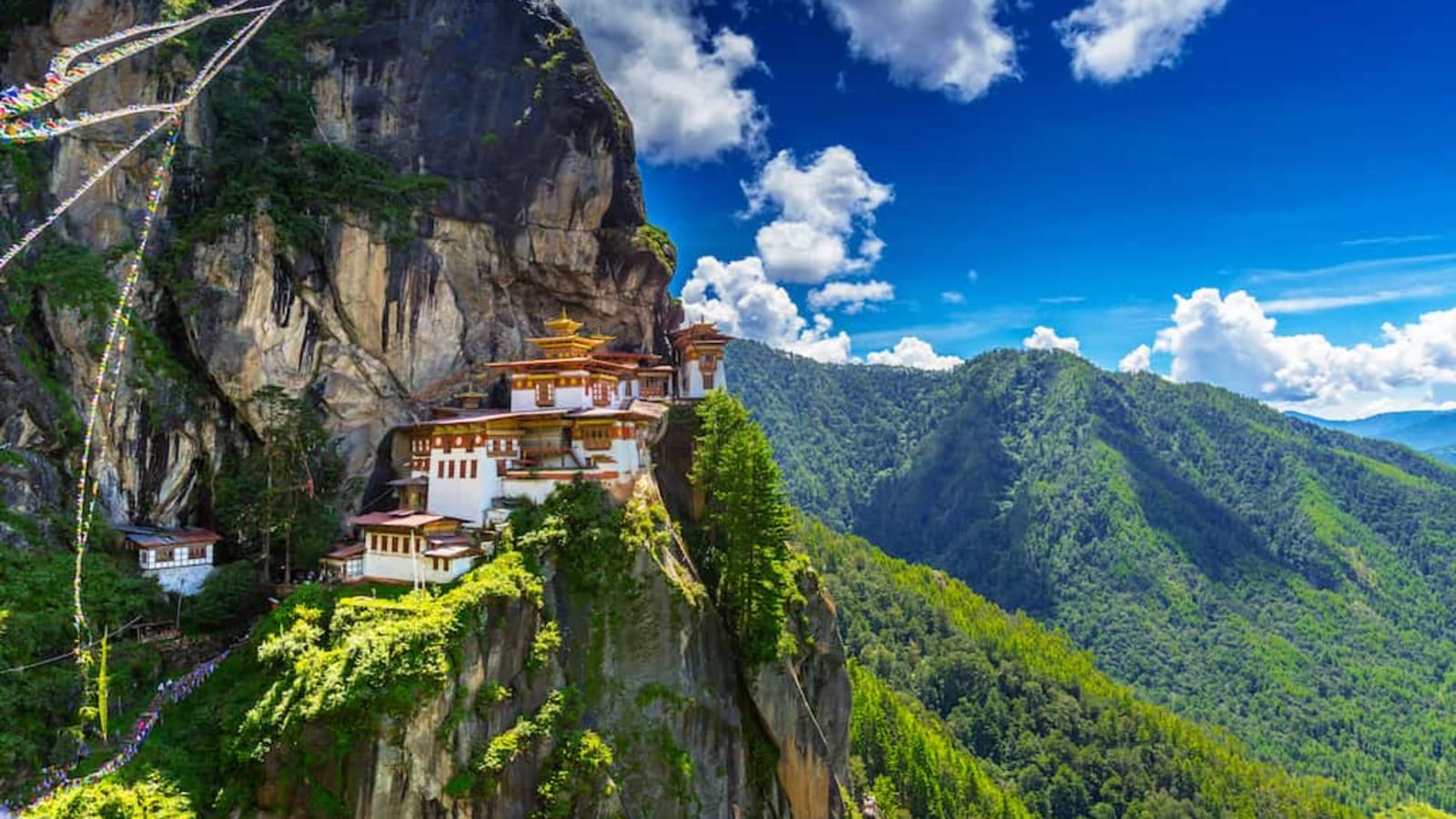
10-Day Nepal and Bhutan Luxury Tour with Tiger's Nest and Chitwan


About This Tour
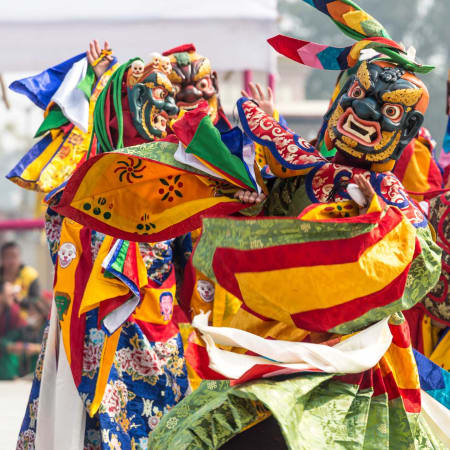
Embark on a luxurious 10-day journey through Nepal and Bhutan, combining Bhutan's cultural treasures with Nepal's heritage and wildlife. Explore monasteries, mu...
Duration: 10 Days · Tour type: Private · Activity level: Easy · Accommodation: Included · Luxury · Transport: Included · Wheelchair access: No · Cities: Bharatpur, Kathmandu, Thimphu, Chitwan, Paro, Punakha · Languages: English
About Chitwan

Chitwan
Get a local local guide to help you discover the kingfishers, rhinos and Bengal tigers in the wilds of Chitwan, between the palm forests and shala trees on the very edge of the mighty Himalaya.
What's Included
- Breakfast and dinner at the respective hotels, and lunch at a local tourist-standard restaurant
- Accommodation on a twin-bed/double-bed sharing basis in a 5-star hotel
- All transportation within the country, including airport transfers
- Sustainable Development Fee for Bhutan
- Entrance fees for museums and monuments
- English-speaking local guide
- Sightseeing
- Bhutan visa fee of USD 40
Not Included
- Single-room supplement charges
- Nepal visa (multiple-entry 15-day visa required)
- Insurance premiums
- Payments for services provided on a personal basis
- Cost of any services not mentioned under the cost-included head
- Costs incurred due to mishaps, strikes, political unrest, etc.
- Personal expenses such as laundry, soft drinks, camera charges, and bottled water
- Incidentals, portage, bellboy charges, tips, or any other services
- Airfare
Itinerary
-
1Day 01
Arrival in Kathmandu
Upon arrival at Kathmandu airport, our representative will welcome you and transfer you to the hotel. After reaching the hotel, a representative will briefly brief you about the further program.
-
2Day 02
Fly to Paro and Explore Thimphu
Fly into Paro by Druk Air/Bhutan Airline. After completing your immigration formalities, you will be received by our representative and tour guide for the duration of your tour. Drive to Thimphu. On arrival in Thimphu, check into your hotel, and after refreshments, visit the following:Kuensel Phodrang to see the tallest Buddha statue and enjoy the full view of Thimphu Valley below.Craft Bazaar, a one-stop place to witness Bhutanese culture and buy Bhutan-made art and craft products. The bazaar, with its 80 stalls, covers all aspects of Bhutan's traditional arts and crafts. Here, craftsmen and artisans from across the country display and sell their handicrafts. You will also visit other handicraft stores.Institute for Zorig Chusum, commonly known as the Arts & Crafts School or Painting School. The institute offers a six-year course in Bhutan's 13 traditional arts and crafts. Visitors can see students learning the various skills taught at the school.Textile Museum: The Royal Textile Museum Bhutan, or Royal Textile Academy, is a national textile museum located very near Taj Tashi Hotel and authentic handicraft shops. Established in 2001, it has a huge collection of antique textile artifacts. Weaving in Bhutan is part of the culture and tradition, and the aim of the RTA is to preserve and promote this living art of Bhutan to international and domestic markets.Weekend Market (every Saturday and Sunday), where much of Thimphu's population and many valley dwellers congregate on the banks of the river. It is an exciting place to visit and provides an opportunity to mingle with the locals.National Sport of Bhutan (Archery), one of the best places to witness a game of traditional and modern archery, the national sport of Bhutan. If you want to take good pictures of an archery match, this is one of the best places to be, and there is almost always a tournament being played. Kuensel Phodrang to see the tallest Buddha statue and enjoy the full view of Thimphu Valley below. Craft Bazaar, a one-stop place to witness Bhutanese culture and buy Bhutan-made art and craft products. The bazaar, with its 80 stalls, covers all aspects of Bhutan's traditional arts and crafts. Here, craftsmen and artisans from across the country display and sell their handicrafts. You will also visit other handicraft stores. Institute for Zorig Chusum, commonly known as the Arts & Crafts School or Painting School. The institute offers a six-year course in Bhutan's 13 traditional arts and crafts. Visitors can see students learning the various skills taught at the school. Textile Museum: The Royal Textile Museum Bhutan, or Royal Textile Academy, is a national textile museum located very near Taj Tashi Hotel and authentic handicraft shops. Established in 2001, it has a huge collection of antique textile artifacts. Weaving in Bhutan is part of the culture and tradition, and the aim of the RTA is to preserve and promote this living art of Bhutan to international and domestic markets. Weekend Market (every Saturday and Sunday), where much of Thimphu's population and many valley dwellers congregate on the banks of the river. It is an exciting place to visit and provides an opportunity to mingle with the locals. National Sport of Bhutan (Archery), one of the best places to witness a game of traditional and modern archery, the national sport of Bhutan. If you want to take good pictures of an archery match, this is one of the best places to be, and there is almost always a tournament being played. Overnight at Thimphu.
-
3Day 03
Drive to Punakha via Dochula Pass
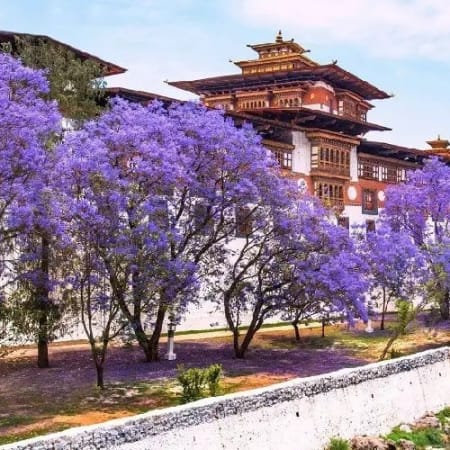
After breakfast, travel to Punakha through Dochula Pass (3,140 m). In clear spring weather, you can enjoy panoramic views of the Himalayan mountain ranges. You will also pass the beautiful 108 chortens built on the hill by Her Majesty Ashi Dorji Wangmo Wangchuck, the Queen Mother of Bhutan, for the security and well-being of His Majesty the King of Bhutan. Visit Druk Wangyal Lhakhang, which was built by Ashi Dorji Wangmo Wangchuck, the Queen Mother of Bhutan, as a tribute to His Majesty the Fourth King of Bhutan, Jigme Singye Wangchuck, and the armed forces after His Majesty led a successful operation against Indian militants who had occupied certain areas of Bhutan. The gallery of the Druk Wangyal Lhakhang has beautiful murals depicting some of the critical events in the reigns of the Kings of Bhutan. Continue to Punakha. Punakha has been inextricably linked to some of the most meaningful events in Bhutanese history and deserves its reputation as one of the most beautiful and significant regions at the heart of Bhutanese culture. Punakha served as the capital of Bhutan from 1637 until 1907. The dzong is historically significant and stands as the symbol of a unified Bhutan. On the way, stop for lunch at Metsina village and then visit the Divine Madman's Monastery, Chhimi Lhakhang, famously known for its fertility shrine, where one can receive a special fertility blessing. Visit Punakha Dzong, located on the island of the Pho-Chu (male river) and the Mochu (female river). The dzong was built in 1637 by Zhabdrung Ngawang Namgyal to serve as the religious and administrative seat of the region. At the dzong, you can see the highest standards in woodwork. Walk across the suspension bridge, about 200 m long, and enjoy the fresh breeze and fascinating views of the dzong. Overnight at Punakha.
-
4Day 04
Travel to Paro with En Route Sightseeing
After breakfast, travel to Paro. On the way, visit the following:Tamchog Lhakhang Bridge: Located on the other side of the river from the Thimphu-Paro highway, the Lhakhang is reached by crossing an iron chain suspension bridge.About a 30-minute drive from Paro towards Thimphu City, Tamchog Lhakhang sits across the Paro River. An iron chain suspension bridge leads to the Lhakhang. The Lhakhang and the bridge were constructed by the 13th-century Tibetan saint Thangthong Gyalpo. The Buddhist saint was also a blacksmith and an architect. Of the many iron chain bridges he built, only a few remain and are still in use. Crossing this old bridge can be a thrilling experience for visitors. Some of the original iron chain links used to build this bridge are displayed in the National Museum in Paro.Paro Airport Bird's-Eye View: Paro International Airport is the only international airport in Bhutan through which you can reach Bhutan by air. It is a small airport with a single runway and very little international traffic. However, it is considered one of the most dangerous airports for landing and also one of the most beautiful in terms of landscape and architecture. Tamchog Lhakhang Bridge: Located on the other side of the river from the Thimphu-Paro highway, the Lhakhang is reached by crossing an iron chain suspension bridge.About a 30-minute drive from Paro towards Thimphu City, Tamchog Lhakhang sits across the Paro River. An iron chain suspension bridge leads to the Lhakhang. The Lhakhang and the bridge were constructed by the 13th-century Tibetan saint Thangthong Gyalpo. The Buddhist saint was also a blacksmith and an architect. Of the many iron chain bridges he built, only a few remain and are still in use. Crossing this old bridge can be a thrilling experience for visitors. Some of the original iron chain links used to build this bridge are displayed in the National Museum in Paro. About a 30-minute drive from Paro towards Thimphu City, Tamchog Lhakhang sits across the Paro River. An iron chain suspension bridge leads to the Lhakhang. The Lhakhang and the bridge were constructed by the 13th-century Tibetan saint Thangthong Gyalpo. The Buddhist saint was also a blacksmith and an architect. Of the many iron chain bridges he built, only a few remain and are still in use. Crossing this old bridge can be a thrilling experience for visitors. Some of the original iron chain links used to build this bridge are displayed in the National Museum in Paro. Paro Airport Bird's-Eye View: Paro International Airport is the only international airport in Bhutan through which you can reach Bhutan by air. It is a small airport with a single runway and very little international traffic. However, it is considered one of the most dangerous airports for landing and also one of the most beautiful in terms of landscape and architecture. Check in at the hotel and later visit the National Museum.National Museum, housed in the Ta Dzong watchtower. Here, an intriguing collection of artifacts provides an excellent introduction to the rich culture and heritage of the Kingdom. National Museum, housed in the Ta Dzong watchtower. Here, an intriguing collection of artifacts provides an excellent introduction to the rich culture and heritage of the Kingdom. Stroll through Paro town in the evening and visit local handicraft stores. Overnight at Paro.
-
5Day 05
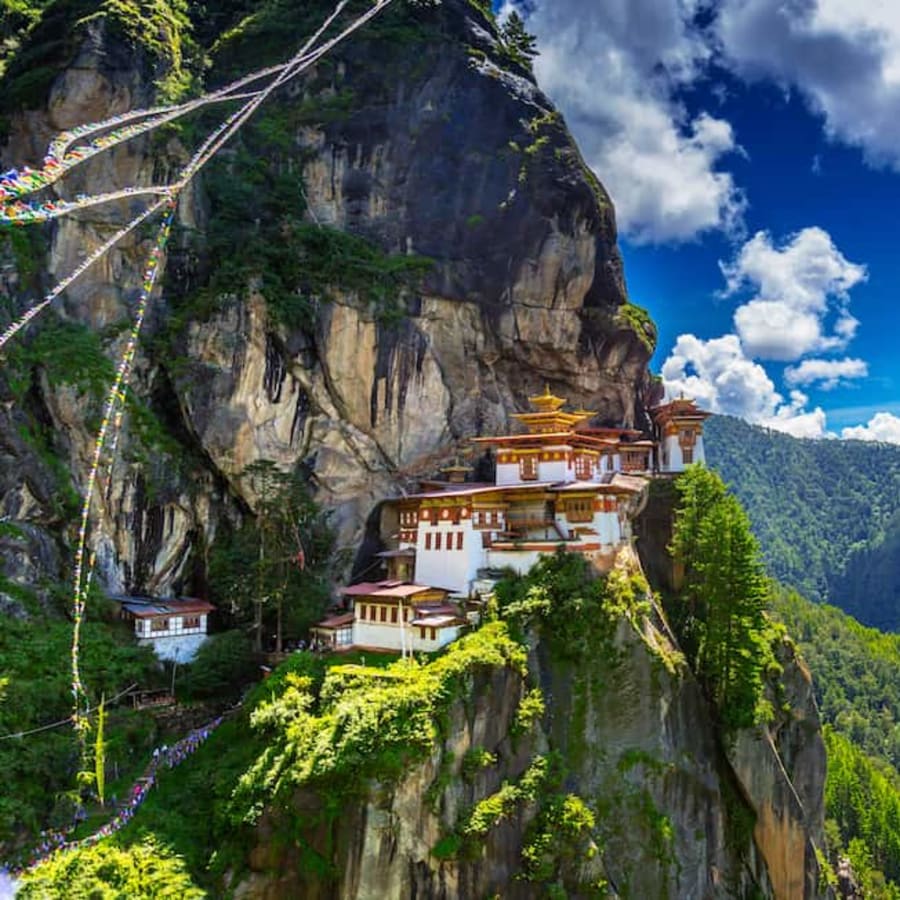
Hike to Tiger's Nest Monastery
After breakfast, hike up to Taktsang Monastery, also known as Tiger's Nest. The walk up to the viewpoint takes about 1 to 1 1/2 hours, depending on your fitness, and from the viewpoint you will enjoy a spectacular view of the monastery clinging to the side of the cliff. Stop for refreshments at the viewpoint cafeteria. Continue walking up to the monastery, which takes about 1 hour. It is said that in the 8th century, Guru Rinpoche flew on the back of a tigress from eastern Bhutan to this place and meditated in a cave there for 3 months. The principal Lhakhang of the present monastic complex dates from 1692. Taktsang was severely damaged by fire in 1998 but has now been restored to its former glory. After visiting the monastery, walk downhill back toward the road, stopping for lunch at the viewpoint cafeteria on the way, and then continue further downhill to the road point. Then drive to Drukgyel Dzong, situated on a ridge in the upper Paro Valley, a 30-minute drive north of Paro town. Drukgyel Dzong, meaning "Fortress of the Victorious Drukpas," was built in 1649 by Zhabdrung Ngawang Namgyel. The dzong served as an essential base for defence in the region until 1951, when it was destroyed by fire. The ruins continued to be protected as an important monument linking the people of Bhutan with the significant events that contributed to maintaining the country's sovereignty. Drukgyel Dzong served solely defensive purposes without administrative and religious functions, especially against external threats from the border. The existing ruins are comparatively well preserved, and one can still understand and distinguish features of the complex without much difficulty. Although most of the timber components of the dzong, such as roof trusses, door and window frames, floors, and ceilings, are almost absent, major portions of the stone and rammed earth wall structures are still standing. They provide visitors with an understanding of ideas and practices for defence in olden times. Reconstruction of the fortress began in April 2016 on the command of His Majesty the King to celebrate the birth of His Royal Highness The Gyalsey and to commemorate the arrival of Zhabdrung Ngawang Namgyal in 1616 AD, the birth year of Guru Rinpoche. The restoration work is estimated to be completed soon. Overnight at Paro.
-
6Day 06
Fly to Kathmandu and Visit Sacred Sites
After breakfast, drive to Paro Airport for departure. After reaching Kathmandu airport, your guide will take you to Pashupatinath Temple and Boudhanath Stupa. Overnight stay in Kathmandu.
-
7Day 07
Fly to Bharatpur and Enter Chitwan National Park
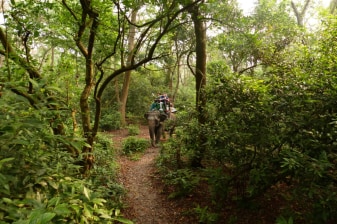
Fly to Bharatpur and drive to Chitwan National Park, the jewel of Nepal's wildlife parks since its inception in 1973. The main highlights of the wildlife activities are jeep rides to see the rare one-horned rhino, sloth bear, four species of deer, a dazzling array of tropical birds, and perhaps a leopard or tiger. Rhinos and deer are frequently sighted, but the chances of seeing a leopard or tiger are remote. The birdlife is fantastic - some 530 species have been sighted within the park. Seek out the fauna by jeep and on foot, and take wooden boat rides into the watery realm of the threatened gharial crocodile, mugger crocodile, and numerous waterfowl. In addition, observe elephants in their natural habitat.
-
8Day 08
Jungle Safari in Chitwan
Today we will do a jungle safari in the national park.
-
9Day 09
Fly to Kathmandu for a City Tour
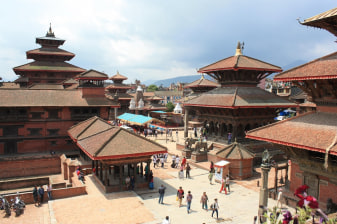
After breakfast, move to the airport and fly to Kathmandu. After reaching Kathmandu, your guide will take you on the Kathmandu city tour.
-
10Day 10
Departure from Kathmandu
After breakfast, we will drive to the airport according to your flight schedule.
Meeting Point
Meeting point: Tribhuvan International Airport (KTM), International Terminal, Kathmandu, Nepal · Tour start: Kathmandu 44600, Nepal — Tour ends at the same location as the start point.