10-Hour Scărișoara Ice Cave Tour from Oradea through the Apuseni Mountains

About This Tour
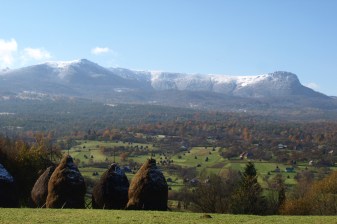
Embark on a 10-hour tour to Scărișoara Ice Cave in the Apuseni Mountains, near Gârda de Sus in Alba County. One of Romania's largest ice caves, it contains the...
Duration: 10 Hours · Tour type: Private · Activity level: Moderate · Accommodation: Not included · Transport: Included · Wheelchair access: No · Cities: Oradea, Cluj Napoca, Apuseni Mountains · Languages: English, German, Romanian
About Cluj Napoca

Cluj Napoca
Bursting with examples of the Baroque and the Gothic, Cluj Napoca conceals quirky art galleries and student clubs between its cobbled streets. Get a local guide to help reveal the secrets of this Transylvanian town.
What's Included
- Guide service
- Pick-up and drop-off from your hotel located in Oradea or Băile Felix
- Transport by air-conditioned car
- Translation service inside the ice cave
- Entrance tickets to the ice cave
- Mineral water bottle
Not Included
- Food
- Souvenirs
- Coffee
Itinerary
-
1Day 01
Scărișoara Ice Cave Adventure from Oradea
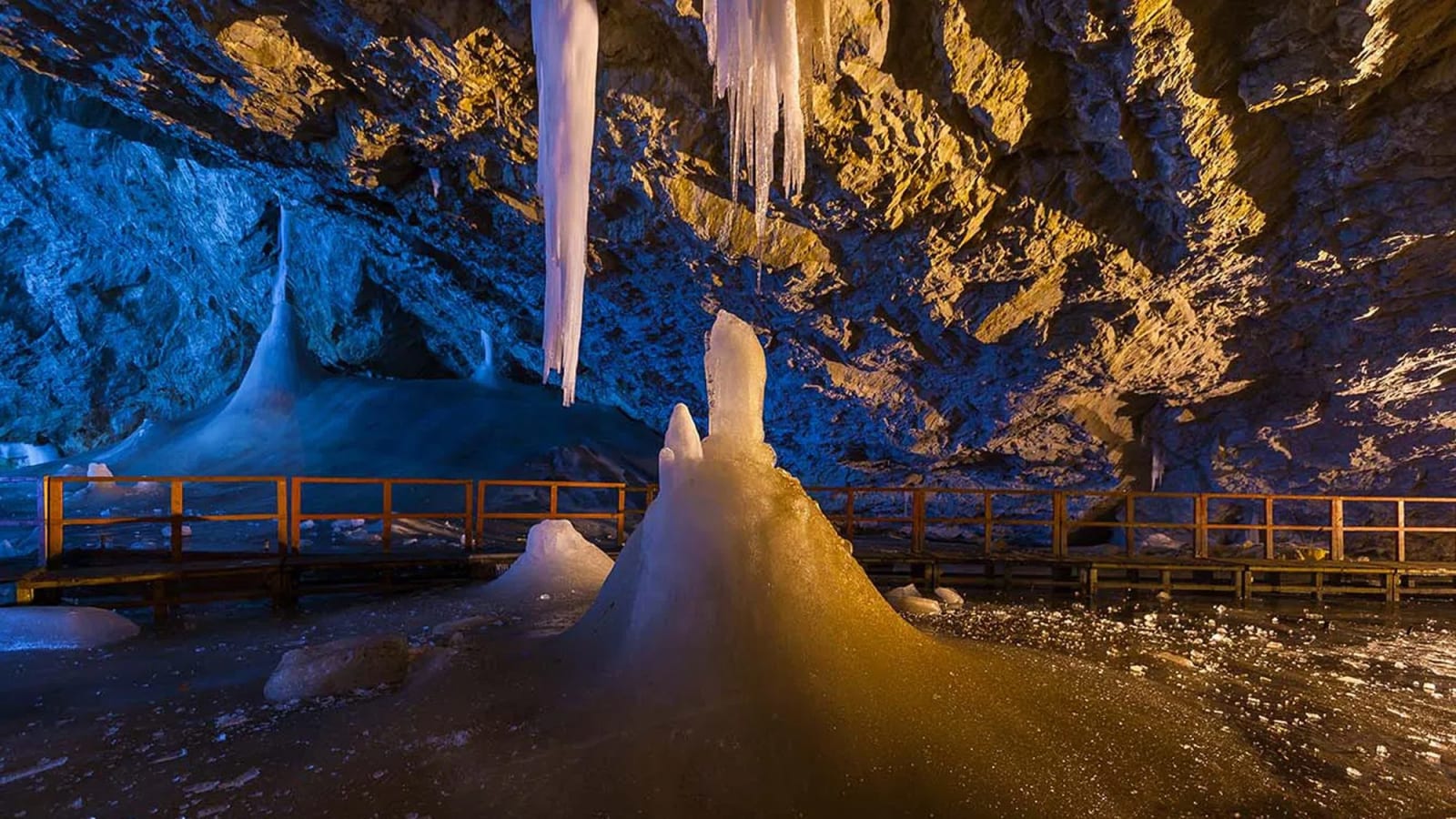
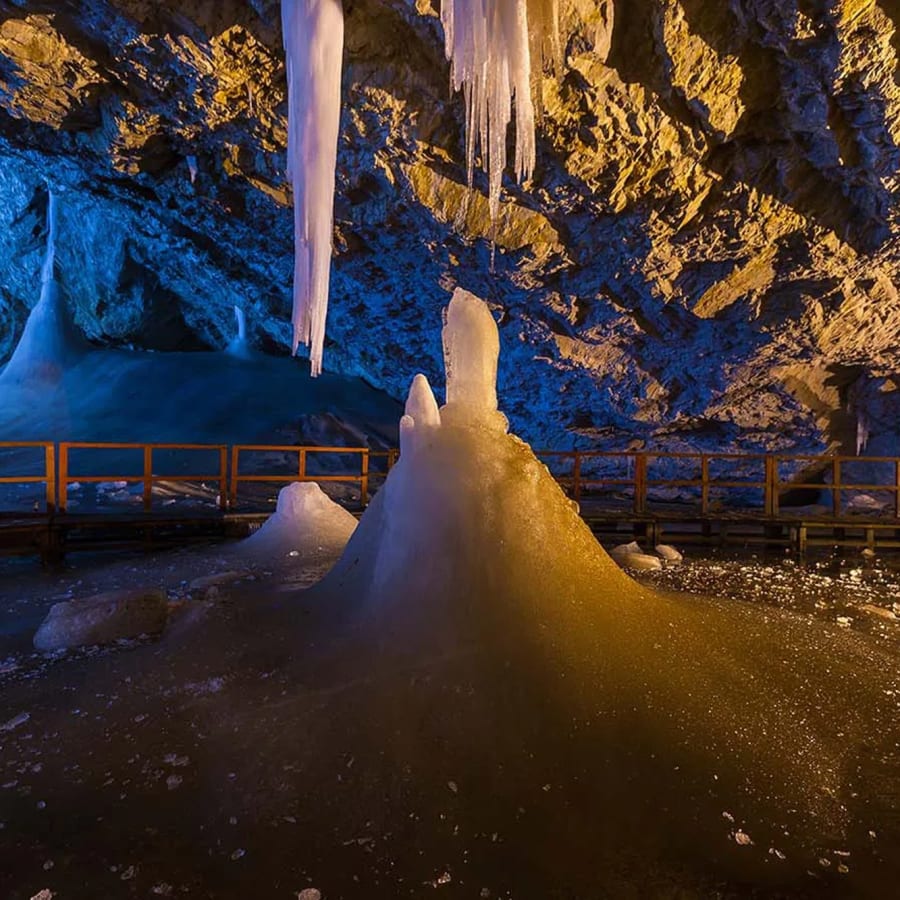
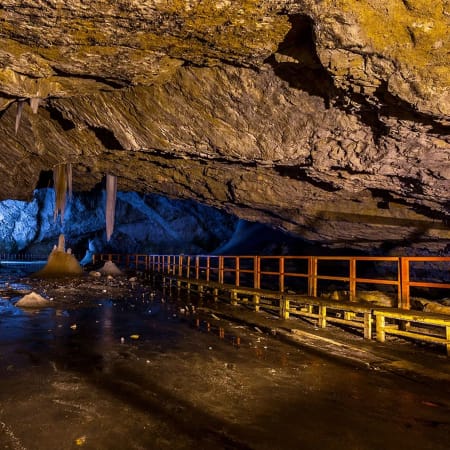
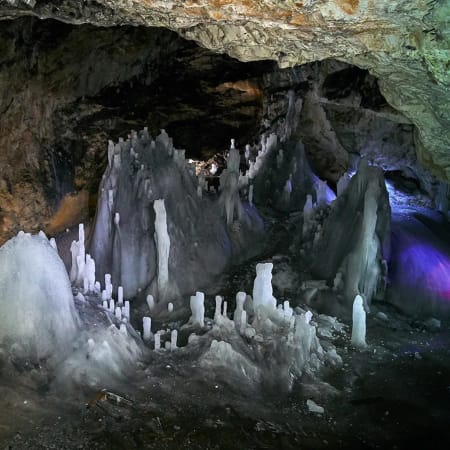
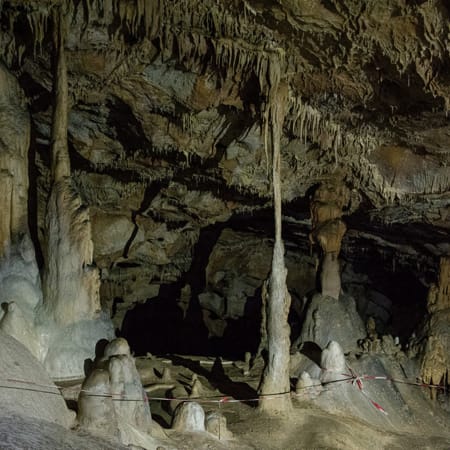
We pick you up from your hotel early in the morning and drive to Scărișoara Ice Cave, located 130 km from Oradea. The route follows Oradea, Beiuș, Ștei, Lunca Village, Arieșeni (DN75), and Gârda. Once you arrive in the village, you will take the path to the top of the mountain at an altitude of 1,165 m. Descend the metal stairs along the abrupt vertical walls of the 50-meter-deep shaft. At the bottom lies the entrance to the glacier. We explore one of the natural wonders of the Apuseni Mountains, a karst region, by visiting Scărișoara Cave. The cave was formed in Jurassic calcareous rocks that are around 150 million years old. A river once flowed on the surface, gradually dissolving the limestone. As this happened, the water went underground and created a cavity. During an ice age 4,000 years ago, this cavity filled with ice. Although the climate later became warmer, the glacier did not disappear, as a new layer of ice formed every winter. Beautiful stalactites and stalagmites await discovery. The cave was first mentioned in 1863 by the Austrian geographer Arnold Schmidl, who made observations and the first map of the cave. It was later explored by the Romanian scientist and speleologist Emil Racoviță between 1921 and 1923, who described it and its origin in his 1927 work Speleology. The cave is 105 m deep and 720 m long, and the entrance shaft, 60 m in diameter and 48 m in depth, gives access by metal stairs to a large chamber measuring 108 m long and 78 m wide - The Big Hall. From this point, three openings lead to The Church, located in front and featuring over 100 stalagmites, as well as the Great Reservation, Coman Gallery, and Little Reservation. The parts open to tourists include the entrance shaft, The Big Hall, and The Church. The other chambers may be visited only with the agreement of the Speleological Institute of Cluj-Napoca, as they are reserved for scientists. Late in the evening, we return to Oradea.
Meeting Point
Meeting point: Oradea, Romania · Tour start: Oradea, Romania — Tour ends at the same location as the start point.