Balkans and Beyond grand tour


About This Tour
Discover the Balkans on a sweeping 17-day private journey from Dubrovnik to Athens, crossing seven countries and linking together UNESCO World Heritage sites, h...
Duration: 17 Days · Tour type: Private · Activity level: Easy · Accommodation: Included · Transport: Included · Wheelchair access: Not applicable · Cities: Athens, Belgrade, Durres, Elbasan, Sarajevo, Mostar, Ioannina, Kruje, Sarande, Sofia, Tirana, Novi Sad, Pristina, Prizren, Dubrovnik, Rila Monastery, Meteora, Kalabaka, Blagaj, Delphi, Butrint National Park, Llogara National Park, Topola · Languages: English
Know before you go: Minimum age; 3; Guided language; English; Tour time zone; Europe/Skopje; Ticket; Barcode format; CODE_128; Ticket per person; No; Optional Add-Ons; Accommodation in SGL room; Please select and pay this extra if you or some of your group would like to be accommodated in Single room. This extra is already included at Solo traveler tour price.; Booking Questions; Number of travelers; Please inform how many persons will travel; Travel dates; Please specify your planned period or exact date; Arrival / Departure; Please advise if your planned arrival / departure place is different than offered; Final comment or question; Please write here if you have some questions or comments for us to hear
About Ioannina

Ioannina
Explore the list of top ranked local tour guides in Ioannina. Get tour activities offered by tour companies and independent travel guides in Ioannina.
What's Included
- Pick up at any hotel within Dubrovnik
- Private transportation with air conditioned comfortable vehicles suited to your group size;
- Drop off at any address within Athens center
- 16 nights accommodation, including hotel taxes and service charges;
- Daily buffet breakfast at hotels;
- Services of an English speaking driver and local host for the whole tour for the whole tour (for parties up to 3 persons guide will be a driver as well);
- Guided tours at Mostar, Sarajevo, Belgrade, Novi Sad, Sofia, Skopje, full day to Kosovo, Ohrid, Tirana and Butrinti
- 1 x Wine tasting package (3 kind of wines and 3 course traditional lunch at the winery restaurant)
- Visits as described in the program, including inside visits as described in the itinerary and admission fees
- 1 bottle of water per person / per day complementary.
Not Included
- Pre or post tour accommodation and airport transfer(s) are on your own.
- Accommodation in Single room with supplement of € 685 per person (on request, to be required and paid during the booking process - included in the price for solo travelers)
- Dinner x 16 when minimum 3 persons on tour with supplement of € 472 per person (on request, to be required and paid during the booking process)
- Any other meal (lunch or dinner)
- Gratuities for the driver/guide (not obligatory)
- Personal travel insurance
Itinerary
-
1Day 01
Start your Balkan tour from Dubrovnik
Pick up from Dubrovnik and drive along the coast line towards Bosnia and Herzegovina. Border crossing and arrival to small village of Blagaj with visit to Blagaj Tekke. The architectural ensemble of the Blagaj Tekke stands by the source of the river Buna, not far from the center of Blagaj. The musafirhana and turbe are tucked into the natural surroundings, constituting a single entity with the cliffs, source of the Buna and mills. The musafirhana of the Blagaj tekke and the turbe have been preserved to this day. The musafirhana was built before 1664, and rebuilt in 1851; its original appearance is not known. The building was subsequently repaired on several occasions. The ensemble of the Blagaj Tekke was presumably built very soon after Ottoman rule was established in Herzegovina, around 1520 at the latest. Later on arrival to Mostar Mostar is a city in southern Bosnia and Herzegovina, straddling the Neretva River. It’s known for the iconic Stari Most (Old Bridge), a reconstructed medieval arched bridge. The nearby alleys are full of shops and market stalls, and the Old Bridge Museum explores the bridge’s long history. A narrow staircase leads up to the Koski Mehmed-Pasha Mosque’s minaret for panoramic city views.Stari Most, also known as Mostar Bridge, is a rebuilt 16th-century Ottoman bridge in the city of Mostar in Bosnia and Herzegovina that crosses the river Neretva and connects the two parts of the city. The Old Bridge stood for 427 years, until it was destroyed on 9 November 1993 by Croat paramilitary forces during the Croat–Bosniak War. Subsequently, a project was set in motion to reconstruct it; the rebuilt bridge opened on 23 July 2004.The bridge is considered an exemplary piece of Balkan Islamic architecture and was commissioned by Suleiman the Magnificent in 1557. It was designed by Mimar Hayruddin, a student and apprentice of architect Mimar Sinan who built many of the Sultan's key buildings in Istanbul and around the empire Accommodation and overnight in Mostar.
-
2Day 02
From Mostar to Sarajevo
Drive along the picturesque canyon of Neretva River and Jablanica pass. Upon arrival in Sarajevo, guided city tour. Sarajevo, capital of Bosnia and Herzegovina, is a compact city on the Miljacka River, surrounded by the Dinaric Alps. Its center has museums commemorating local history, including Sarajevo 1878–1918, which covers the 1914 assassination of Archduke Franz Ferdinand, an event that sparked World War I. Landmarks of the old quarter, Baščaršija, include the Ottoman-era Gazi Husrev-bey MosqueSarajevo is the political, financial, social and cultural center of Bosnia and Herzegovina and a prominent center of culture in the Balkans, with region-wide influence in entertainment, media, fashion and the arts. Due to its long history of religious and cultural diversity, Sarajevo is sometimes called the "Jerusalem of Europe" or "Jerusalem of the Balkans". It is one of only a few major European cities to have a mosque, Catholic church, Orthodox church and synagogue within the same neighborhood. Baščaršija is Sarajevo's old bazaar and the historical and cultural center of the city. Baščaršija was built in the 15th century when Isa-Beg Isaković founded the city. Baščaršija is located on the north bank of the river Miljacka, in the municipality of Stari Grad. On Baščaršija there are several important historic buildings, such as the Gazi Husrev-beg Mosque and sahat-kula. Today Baščaršija is the major tourist attraction of Sarajevo Overnight in Sarajevo.
-
3Day 03
From Sarajevo to Belgrade
Long distance drive from Sarajevo to Belgrade, Serbia, with border crossing. Belgrade is the capital of the southeast European country of Serbia. Its most significant landmark is the Beogradska Tvrđava, an imposing fortress at the confluence of the Danube and the Sava rivers. The fort is a testament to the city’s strategic importance to the Roman, Byzantine, Ottoman, Serbian and Austrian empires, and it's now the site of several museums as well as Kalemegdan, a vast park. Belgrade is also famous as the former capital of Yugoslavia. Overnight in Belgrade.
-
4Day 04
Belgrade and Vojvodina area
Full day tour to Vojvodina area, with guided visits in Novi Sad and Fruska gora. Novi Sad is a city in northern Serbia on the banks of the Danube River. Standing atop a riverside bluff, much of Petrovaradin Fortress dates to the 17th and 18th centuries, with an iconic clock tower and a network of tunnels. Across the river is the old quarter, Stari Grad, site of the Gothic Revival Name of Mary Church and the neo-Renaissance City Hall. Petrovaradin Fortress, nicknamed "Gibraltar on/of the Danube" is a fortress in the town of Petrovaradin, itself part of the City of Novi Sad, Serbia. It is located on the right bank of the Danube river. The cornerstone of the present-day southern part of the fortress was laid on 18 October 1692 by Charles Eugène de Croÿ. Petrovaradin Fortress has many tunnels as well as 16 kilometres (9.9 mi) of uncollapsed underground countermine system. In 1991 Petrovaradin Fortress was added to Spatial Cultural-Historical Units of Great Importance list of the Republic of Serbia. Fruška gora is a mountain in northern Serbia. Most of the area is administratively part of Serbia, but a small part on its western side extends into eastern Croatia. The area under Serbian administration forms the country's oldest national park. It is interesting to mention that ninety million years ago, Fruška gora mountain was an island in Pannonian sea. When the sea went dry, the island remained without its aquatic neighbor, but in exchange nature bestowed upon it the role of the only mountain in the flat Vojvodina, raised in the shape of a narrow reef, approximately 46 miles long, from which extend single lateral reefs flourishing with oak, hornbeam, beech and basswood forests. Back to Belgrade Kalemegdan park and fortress, or simply Kalemegdan is the largest park and the most important historical monument in Belgrade. It is located on a 125-metre-high cliff, at the junction of the River Sava and the Danube. The Belgrade fortress on Kalemegdan comprises of Upper and Lower Town and the vast field in front the very fortress that Turks named “Kalemegdan”, joining the words “kale”, which means city, fortress and “megdan”, the Turkish word for field. The most beautiful and most spacious park in nation’s capital once used to be a field where battles were fought with enemies. Overnight in Belgrade
-
5Day 05
From Belgrade to Sofia, via Topola
Morning visit to the The Museum of Yugoslavia, a public history museum in Belgrade, the capital of Serbia. It chronicles the period of Kingdom of Yugoslavia and Socialist Yugoslavia as well as the life of Josip Broz Tito. Tito's grave is located in one of the Museum buildings. Drive from Belgrade to Topola and visit to Oplenac. The St. George's Church in Oplenac, also known as Oplenac, is the mausoleum of the Serbian and Yugoslav royal house of Karađorđević located on top of the Oplenac Hill in the town of Topola, Serbia. The church of Oplenac was founded by King Peter I of Yugoslavia. Border crossing and arrival in Sofia in the afternoon. Overnight in Sofia.
-
6Day 06
From Sofia to Skopje via Rila monastery
Guided walking tour in Bulgarian capital Sofia. Sofia is located in the west part of country, below Vitosha Mountain. The city’s landmarks reflect more than 2,000 years of history, including Greek, Roman, Ottoman and Soviet occupation. Medieval Boyana Church has 13th-century frescoes. Built by the Romans in the 4th century, St. George Rotunda Church has medieval and Ottoman decoration dating to the 10th century. Alexandar Nevsky cathedral, located at the heart of Bulgaria’s capital city of Sofia, comprises a little bit of everywhere. The marble came from Munich, the metal was sourced Berlin and manufactured in Vienna, and the mosaics journeyed all the way from Venice. Built in Neo-Byzantine style, it serves as the cathedral church of the Patriarch of Bulgaria and it is believed to be one of the 50 largest Christian church buildings by volume in the world. Later on drive towards Rila monastery (UNESCO site) The Monastery of Saint Ivan of Rila, better known as the Rila Monastery is the largest and most famous Eastern Orthodox monastery in Bulgaria. It is situated in the southwestern Rila Mountains 117 km south of the capital Sofia in the deep valley of the Rilska River ("Rila River") at an elevation of 1,147 m bove sea level, inside of Rila Monastery Nature Park. The monastery is named after its founder, the hermit Ivan of Rila (876 - 946 AD), and houses around 60 monks. Founded in the 10th century, the Rila Monastery is regarded as one of Bulgaria's most important cultural, historical and architectural monuments and is a key tourist attraction for both Bulgaria and Southern Europe. Border crossing and arrival in Skopje. Overnight in Skopje
-
7Day 07
Skopje and Matka canyon
Guided walking tour in Skopje old and new town with visit to Matka canyon. Skopje is the capital and largest city in Macedonia. It is the country's political, cultural, economic, and academic center. The territory of Skopje has been inhabited since at least 4000 BC; remains of Neolithic settlements have been found within the old Kale Fortress that overlooks the modern city center. River Vardar, the longest Macedonian river is dividing the city into the old part, located on the left bank of the river and the modern part of Skopje, located on the right bank. Covering roughly 5,000 hectares, Matka canyon is one of the most popular outdoor destinations in Macedonia and is home to several medieval monasteries. The Matka Lake within the Matka Canyon is the oldest artificial lake in the country. A lot of possibilities to escape from city life here - you can take a boat trip to the entrance of cave Vrelo or alternatively, hop aboard a kayak or raft and see river Treska canyon by water. Or simply you can walk along the lake and enjoy the nature. The Old Bazaar is situated on the eastern bank of the Vardar River, stretching from the Stone Bridge to the Bit-Pazar area. As one of the oldest and largest marketplaces in the Balkans, it has been Skopje's center for trade and commerce since at least the 12th century. Beside its importance as a market place, the Old Bazaar is known for its cultural and historical values. Although Ottoman architecture is predominant, remains of Byzantine architecture are evident as well, while recent reconstructions have led to the application of elements specific to modern architecture. The Old Bazaar is still home to several active mosques, two churches and a clock tower. The Mother Teresa Memorial House, dedicated to the humanitarian and Nobel Peace Prize laureate Mother Teresa, can be found in her hometown Skopje, where she lived from 1910 to 1928. Construction of the house began in May 2008. The project was financed by the Government of Macedonia and carried out by the Ministry of Culture. It is a modern, transformed version of Mother Teresa's birth house with a multifunctional but sacral character. Inside the house, part of her relics are preserved, which were transferred to Skopje with the support of the Roman Catholic Church of Skopje. There is a museum that includes realistic sculptures of Mother Teresa and members of her family. One sculpture shows Mother Teresa as a ten-year-old child, sitting on a stone and holding a pigeon in her hands. The Fortress Kale is located on the eponymous hill, in the very center of Skopje, on the left bank of the river Vardar and partly in the western part of the bazaar. According to the information so far, the area on which today's fortress is located was inhabited since the prehistoric times, i.e. sometime around IV to III millennium BC. The fortress was again inhabited sometime around the 7th to 6th century BC. This settlement was protected by walls and existed sometime until the IV or III century BC. Overnight in Skopje.
-
8Day 08
Day tour to Kosovo
Full day tour to Kosovo, the youngest European country. Officially the Republic of Kosovo, is a partially-recognized state in Southeastern Europe. On 17 February 2008, Kosovo unilaterally declared its independence from Serbia. It has since gained diplomatic recognition as a sovereign state around 100 UN member states. Geographically defined in an area of 10,887 km2, Kosovo is landlocked in the center of the Balkans and bordered by the uncontested territory of Serbia to the north and east, Macedonia to the southeast, Albania to the southwest and Montenegro to the west. Grachanica monastery is unique Serbian Orthodox monastery located in the small village of Gracanica. It was built by the Serbian king Stefan Milutin in 1321 on the ruins of a 6th-century basilica. The monastery was declared a Monument of Culture of Exceptional Importance in 1990, and on 13 July 2006 it was placed on the UNESCO World Heritage List under the name of Medieval Monuments in Kosovo. As the Kosovo capital and the biggest city, Pristina is the seat of the eponymous municipality and district. You will have a chance to walk in the main pedestrian zone and feel the vibrant life of this city. Picturesque town of Prizren is located on the south-eastern part of the country and it is designated as the historical capital of Kosovo. A lot of Christian and Muslim monuments make this town unique. Prizren is one of the oldest settlements in Kosovo and the western Balkans. Prizren has been traditionally identified with the settlement of Theranda in Roman Dardania. The Sinan Pasha Mosque is an Ottoman mosque and one of remarks of Prizren. It was built in 1615 by Sofi Sinan Pasha, bey of Budim. The mosque overlooks the main street of Prizren and is a dominant feature in the town's skyline. Drive back to Skopje for overnight
-
9Day 09
Central part of Macedonia - Tikvesh wine region
Morning visit to Vodno mountain and St. Panteleimon monastery Vodno mountain is located to the southwest of the capital city Skopje. The highest point of the mountain is at Krstovar peak on 1066m where so called Millennium cross was built at year 2000. Vodno is a favorite destination for all Skopje citizens for hiking, trekking or simply walking in the nature. Near the village of Gorno Nerezi and only 20 min drive from Skopje city center, high on the forested slopes of Vodno mountain, the 12th century church of St. Panteleimon is founded. It is one of the oldest and most important churches in Macedonia, built and painted in 1164 under the patronage of Byzantine Prince Alexios Komnenos whose name is made immortal by being carved in marble, right above the entrance in the church. It was dedicated to St. Panteleimon, the protector of health. Drive to central Macedonia and Stobi Stobi archeological site is the biggest Roman site in Macedonia dates from 1st century AD. Well preserved Roman amphitheater, unique mosaics, the Baptistery and many more makes this site most see. Afternoon arrival to the biggest wine region in Macedonia - Tikvesh, located in the very heart of the country and stretches along similar latitudes as the Bordeaux region in France, Tuscany region in Italy and the Napa Valley region in California. The wine district is situated on around 2,000 sqm of fertile land, surrounded by mountains on three sides. With nearly 13,000 hectares of vines, the Tikves wine region represents around one third of the all grapes grown in Macedonia, a place where the southern Mediterranean climate, full of long and warm summers and the northern continental climate, with mild and rainy winters, combine. Visit to the local winery and wine testing with lunch at the winery restaurant. Arrival in Bitola and overnight.
-
10Day 10
From Bitola to Ohrid
Bitola city tour in a morning. Bitola is a city in the southwestern part of Macedonia. It is located in the southern part of the Pelagonia valley, surrounded by the Baba, Nidže and Kajmakčalan mountain ranges. The city stands at an important junction connecting the south of the Adriatic Sea region with the Aegean Sea and Central Europe, and is an administrative, cultural, industrial, commercial, and educational center. It has been known since the Ottoman period as "The City of The Consuls", since many European countries had consulates in Bitola. The main pedestrian street called "Shirok sokak" its two squares, the Clock tower and Bitola old bazaar are must see locations. The ancient site of Heraclea is located only few kilometers from the center of Bitola. it was established in 3rd century BC by Philip II, the father of Alexandar the Great. Heraclea was a strategically important town during the Hellenistic period, as it was at the edge of Macedon's border with Epirus to the west and Paeonia to the north, until the middle of the 2nd century BC, when the Romans conquered Macedon and destroyed its political power. The Romans divided Macedonia into 4 regions and Heraclea was in the province of Macedonia Prima. The main Roman road in the area, Via Egnatia went through Heraclea, and Heraclea was an important stop. The prosperity of the city was maintained mainly due to this road. Objects discovered from the time of Roman rule in Heraclea are votive monuments, a portico, thermal (baths), a theatre and town walls Drive to Ohrid via Prespa lake and Galichica National park on the local scenic roads. Galicica National park is spread between Prespa and Ohrid lakes and It stretches over an area of 227 square kilometers. Spectacular drive on the narrow road gives you panoramic views of both lakes. The floral life in the Galičica National Park represents over 1600 species, of which many relicts and endems have the final frontier of its range exactly on the mountain Galičica. There is characteristically presence of up to now 13 discovered local endems on Macedonian side to be found exclusively on the slopes of Galičica and nowhere else. Arrival in Ohrid in the afternoon.Accommodation and overnight in Ohrid
-
11Day 11
Ohrid and Ohrid lake - UNESCO sites
Full day guided Ohrid and Ohrid lake tour. Because of its religious importance the city of Ohrid is also known as "Jerusalem on the Balkans". Its old town and plenty of churches and other sites are just part of the walking tour. Ohrid is known for once having 365 churches, one for each day of the year. The city is rich in picturesque houses and monuments, and tourism is predominant. In 1979 and in 1980 respectively, Ohrid and Lake Ohrid were accepted as Cultural and Natural World Heritage Sites by UNESCO. Ohrid is one of only 28 sites that are part of UNESCO's World Heritage that are Cultural as well as Natural sites. Remains of the Ancient theatre could be found in the heart of Ohrid old town. The Ancient theatre of Ohrid was built in 200 BC and is the only Hellenistic-type theatre in the country, as the other three in Scupi, Stobi and Heraklea Lynkestis are from Roman times. It is unclear how many people the original theater used to seat, as only the lower section still exists. The open theater has a perfect location: the two hills that surround it keep it protected from winds that could interfere with acoustics during performances. The Ohrid fortress is known as "Samuilova tvrdina" or The fortress of Tsar Samuil. it is on the highest part of the hill where Ohrid is situated. According to recent excavations by Macedonian archaeologists, it was contended that this fortress was built on the place of an earlier fortification, dated to the 4th century BC, which was probably built by King Philip II of Macedonia. Situated on a small cliff right above the lake, this unique church is landmark of Ohrid. Saint John the Theologian, Kaneo or simply Saint John at Kaneo is a Macedonian Orthodox church overlooking Lake Ohrid. The church is dedicated to John of Patmos, the writer of Revelation, who has been by some considered to be the same person as John the Apostle. The construction date of the church remains unknown but documents detailing the church property suggest that it was built before the year 1447. Archaeologists believe that the church was constructed some time before the rise of the Ottoman Empire very likely in the 13th century. The Holly area of Plaosnik is the place where the first Slavic university was established by St Clement at 9th century. The area is home of the remain of an early Christian basilica and now days the new St. Clement's church is built on remains of the old church from 9th century. Afternoon drive towards St. Naum monastery and visit. Monastery which is founded by St. Naum at 9thCentury is visited by pilgrims and travelers alike. It is one of the few with locational and architectural splendor and without any doubt, one of the most attractive Macedonian tourist destinations. Overlooking Ohrid lake, the walls provide breathtaking panoramic views of the entire bay area. Near the monastery, you can enjoy a boat ride above the springs of the river Black Drim which flows into Ohrid lake Overnight in Ohrid
-
12Day 12
From Ohrid to Tirana
Border crossing and enter Albania. Drive towards Tirana, with stop at the city of Elbasan. Elbasan is a town in the central part of Albania, on the way to Tirana, and it is the fourth largest city in Albania. It is located on the Shkumbin River in the District of Elbasan. Possibility of having a coffee break and visiting the city walls. The city gained prominence after the Chinese built a steel mill in 1974. One travel writer relayed from conversation that during the communist regime, almost everyone in the country seemed to have a gun, likely manufactured by this Chinese-financed factory in Elbasan, although the country did not seem to have tractors, ploughs, or sewing machines. Tirana is the capital of Albania and the biggest city in the country, located in the center of Albania enclosed by mountains and hills with Mount Dajt elevating on the east and a slight valley on the northwest overlooking the Adriatic Sea in the distance. Due to its location at the Plain of Tirana and the close proximity to the Mediterranean Sea, the city is particularly influenced by a Mediterranean seasonal climate. It is among the wettest and sunniest cities in Europe, with 2,544 hours of sun per year. Overnight in Tirana
-
13Day 13
Tirana and Kruje
Full day Tirana and Kruje guided tour. Walking tour in Tirana city center in a morning with visits to the several important sites. Afternoon drive towards Kruje, the small city located high on the mountain near Tirana. Krujе is a town and a municipality in north central Albania, located between Mount Krujе and the Ishеm River. In 1190 Krujë became the Principality of Arbër. In the early 15th century Krujë was conquered by the Ottoman Empire, but then recaptured in 1443 by Skanderbeg, leader of the League of Lezhë, who successfully defended it against three Ottoman sieges until his death in 1468. Today you can visit the National Museum "George Castrioti Skanderbeg", also known as the Skanderbeg Museum or the Kruja Museum which is one of the most important and visited museums in Albania. The museum was built at the end of the 70's and was inaugurated on November 1, 1982. Back to Tirana and evening at leisure and overnight.
-
14Day 14
The Albanian coastline
From Tirana to Saranda, via Durres and the picturesque coastal road and Llogara National park. Durres is a port city on the Adriatic Sea in western Albania, west of the capital, Tirana. It’s known for its huge Roman amphitheater. Nearby is a 9th-century church with mosaic-covered walls. Coffee break near the port and city center The Llogara National Park is centered on the Ceraunian Mountains along the Albanian Riviera in Southwestern Albania, spanning an surface area of 1,010 ha. The park's terrain includes large alpine meadows, vertical rock faces, precipices and dense forests.Drive on the narrow coastal road with several photo stops and coffee break. Saranda is a resort on the Albanian Riviera, in southern Albania. Sandwiched between the Ionian Sea and hills of olive groves, the town is on a horseshoe-shaped bay, edged by beaches and a promenade. In the center are the archaeological remains of a 5th-century synagogue, later an early Christian basilica. Intricate floor mosaics are still evident. The 16th-century Lëkurësi Castle is on a hilltop above the town. Evening at leisure in Saranda and overnight.
-
15Day 15
From Saranda to Ioannina
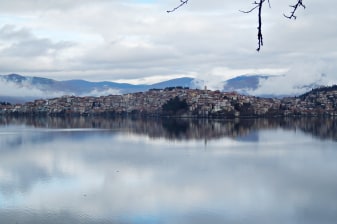
Drive from Saranda to Ioannina with visit to Butrinti archeological site. Butrinti was an ancient Greek and later Roman city and bishopric in Epirus. Perhaps inhabited since prehistoric times, Buthrotum was a city of the Epirote tribe of the Chaonians, later a Roman colony and a bishopric. Today the remains of this city are one of several UNESCO sites in Albania. Guided tour with private guide will be provided. Border crossing and enter Greece. Ioannina, often called Yannena within Greece, is the capital and largest city of the Ioannina regional unit and of Epirus, an administrative region in north-western Greece. Ioannina castle is located at the south-eastern edge of the town, on a rocky peninsula of Lake Pamvotis, the castle was the administrative heart of the Despotate of Epirus, and the Ottoman vilayet. The castle was in constant use until the late Ottoman period and the fortifications underwent several modifications throughout the centuries. Ioannina lake is another attraction at this city. We recommend a boat trip to the island at your free afternoon in this city. Overnight at 4* boutique hotel in Ioannina
-
16Day 16
Greek mountains
Drive to Metsovo and stop for visit. Metsovo is a small town in Epirus, in the mountains of Pindus in northern Greece, between Ioannina to the west and Meteora to the east. As the lhe largest centre of Aromanian (Vlach) life in Greece, Metsovo is a large regional hub for several small villages and settlements in the Pindus region, and it features many shops, schools, offices, services, museums, and galleries. The economy of Metsovo is dominated by agriculture and tourism, the latter of which flourishes in winter. Afternoon visit to Meteora monasteries The Meteora is a rock formation in central Greece hosting one of the largest and most precipitously built complexes of Eastern Orthodox monasteries, second in importance only to Mount Athos. The six monasteries are built on immense natural pillars and hill-like rounded boulders that dominate the local area. The Great Meteoron Holy also know as Monastery of the Transfiguration of the Saviour, is the biggest and oldest one of all. It was called the monastery which remains “suspended in the air” (meteoro), because of the cliff formation of a gigantic rock on top of which it was built. The Great Meteoro Monastery or “Megalo Meteoron” was founded in the 14th century by Saint Athanasios the Meteorite. If you prefer a little hiking, you will have a chance to visit this monastery, reachable only by uphill/downhill stairs. Arrival in Kalambaka, city situated right below Meteora monasteries for overnight.
-
17Day 17
To Athens
Drive from Kalambaka to Athens with stop at arheological site of Delphi. The archaeological site of Delphi is at 1 km distance from the present settlement of Delphi. The modern road divides and delimitates the two ancient sanctuaries, namely the Sanctuary of Athena Pronaia to the south and the Sanctuary of Apollo to the north. The sanctuary of Athena Pronaia comprises the Tholos, the temples of Athena and two (at least) treasuries, whereas next to it the impressive gymnasium is situated. Arrival in Athens in the afternoon and drop off. End of the program.
Meeting Point
Meeting point: Dubrovnik, HR · Tour start: Dubrovnik, HR — Tour ends at the same location as the start point.