15-Day Northern Pakistan Festival Tour with Kalash and Hunza


About This Tour
Travel through Northern Pakistan from Islamabad to Chitral, Kalash, Phandar, Hunza, Gojal, Naltar, Gilgit, Besham, and Swat on a 15-day journey built around the...
Duration: 15 Days · Tour type: Shared · Activity level: Easy · Accommodation: Included · Standard · Transport: Included · Wheelchair access: Not applicable · Cities: Islamabad, Gilgit, Hunza, Chitral, Besham, Swāt · Languages: English, Hindi, Urdu
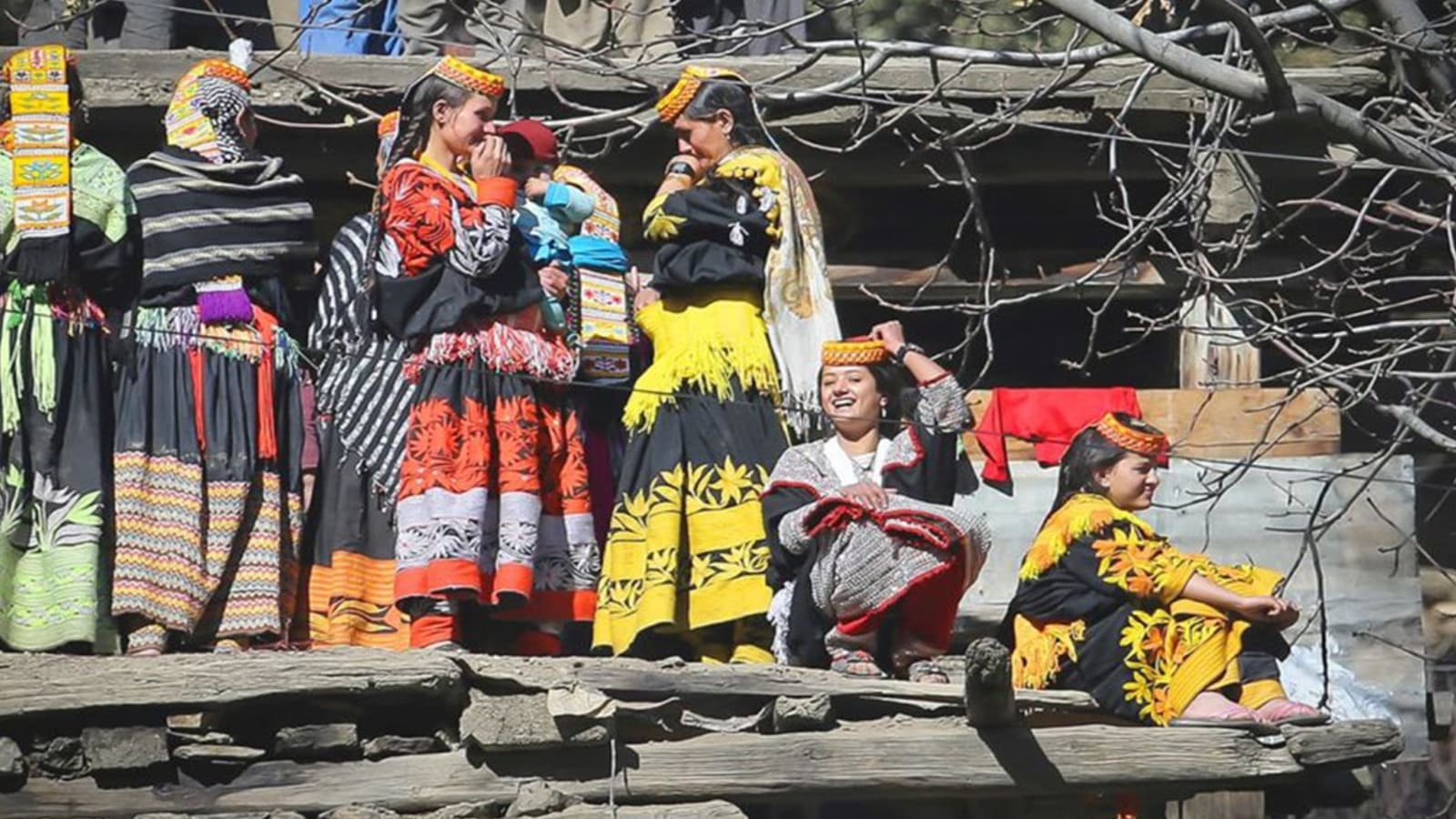
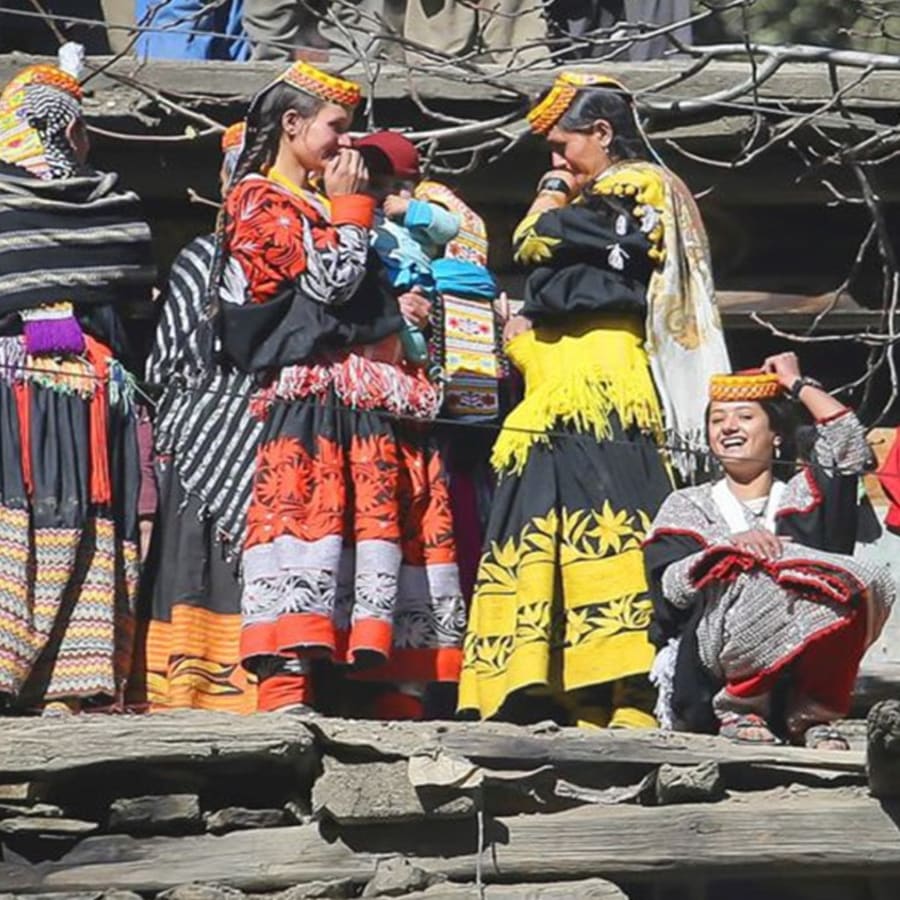
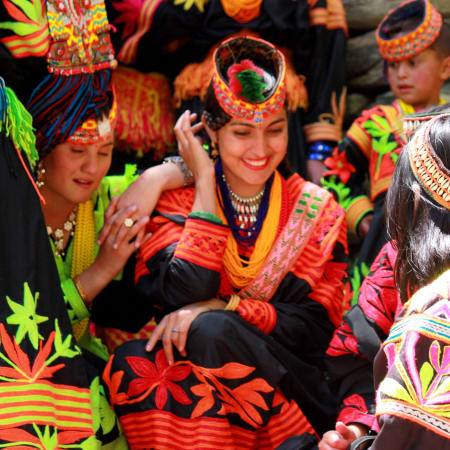
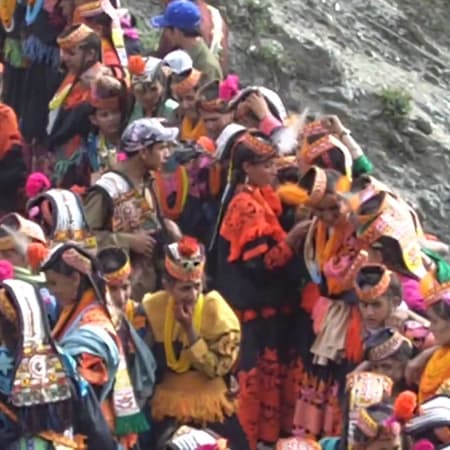
Know before you go: The Kalash Valleys of Rumbur, Bunboret, and Birir are within Chitral in the North-West Frontier Province, near Nuristan in Afghanistan. The people here are some of the only non-Muslims for hundreds of miles. The Kalash worship the many gods of Kafiristan, including Balmain, the heroic demi-god of the Kalash whom the Choimus Festival celebrates.; Where: Kalash Valleys, Chitral, North-West Frontier Province, Pakistan; When: Mid December; Happenings: Dancing, food, chanting, and prayers to the Balmain spirit; Remember to bring: Your own goat for the ritual slaughter ceremony; The Kalash Valleys of Rumbur, Bunboret, and Birir are within Chitral in the North-West Frontier Province, near Nuristan in Afghanistan. The people here are some of the only non-Muslims for hundreds of miles. The Kalash people are a little wary of strangers, but are likely to welcome a foreigner more than the curious tours of townie Pakistani groups.; The 3000 remaining Kalasha of the valleys live in unique houses made of local stone and wood, stacked on top of one another against the hills so that the roof of the lower house is the veranda of the upper one. They make their living with staple crops like lentils and wheat, along with goat herding. Life is very traditional and, as in many places in this part of the world, the division between men and women is great. Family life, cattle herding, and harvesting form their main livelihood, with the occasional distraction of a festival or two. Women move into a Bashleni house during childbirth and also when they are menstruating. Many aspects of the society are both communal and segregated and, typically, marriages are by arrangement.; They believe they are originally from slim, although no one yet knows where that is. It is more likely they are descendants of Indo-Aryans from 2000 BC, though they claim to be direct descendants of Alexander the Great from 400 BC. The locals derogatively call them the black kafirs, and the Chitral locals pushed the tribes further and further into the hills where they have now settled, while their numbers rapidly dwindled.; Their region of Kafiristan was divided by the British in 1893, and those who were in Afghanistan were mainly slaughtered or forced to convert to Islam by Afghanistan's Amir. The remaining Kalash are the last remnants of the pre-Islamic culture of Kafiristan, what Muslims called the 'land of the unbelievers'.; The Kafir culture conflicted with Islam through its love of ornate wood carvings, wine, and livestock, and violent attempts to convert the region took place during the 19th century. The Kalash survived the bloody slaughter because Chitral was a region governed by the British, who offered some protection.; Nowadays, the official Pakistan government line is one of ethnic tolerance, but the Kalash people are still subjected to constant racism and taunts. Their traditional way of life is also under threat from tourism and the industrial development of the valley by wealthy Pakistan corporations whose rubbish and sewage are polluting the Kalash water supply. They live on subsistence farming, and food shortages and limited grazing forest land as a result of deforestation are a constant problem.; Whether enforced or not, the constant pressure to assimilate with Muslim and Pakistan culture remains on the Kalash people. In poor economic times, many Kalash are forced to convert to Islam and leave the tribe in search of work. Muslim tourists are known to abuse and leer at Kalash women who do not cover their heads, and some women have been forced into prostitution. Many families are now divided by religion, with fewer full-blooded Kalash remaining, although the numbers of the tribe are thought to be increasing.; The Kalash are infamous for their festivals; these people know how to let their hair down in style. There is much dancing, where the elders chant legends with drum accompaniment and the women dance around outside. Locally brewed mulberry wine is drunk in copious quantities, although the festival dates are rarely set in stone as they depend on the harvest, so if you're running short of time you may be disappointed.; The festival of Joshi is for the spring harvest and lasts 4-6 days in mid-May, and the Uchao festival on 20th August celebrates the pre-harvest with cheese, corn, and wine. The Choimus in mid-December for the winter solace is the most impressive, lasting 10 days. Non-Muslim foreigners are usually allowed to participate, but you must buy your own goat for the sacrifice.; The Kalash worship the many gods of Kafiristan, including Balmain, the heroic demi-god of the Kalash whom the Choimus Festival celebrates. Balmain's spirit is said to pass through the valley, counting the people of the Kalash and collecting their prayers before returning them to Tsiam, the mythical land of the Kalash.; There is much dancing in giant circles around bonfires and chanting in mesmerising repetitions, with just a drum beat accompanying the voices. The girls wear intricate costumes with dresses made of cowry shells, coins, and beads, along with intricate hair braiding and headwear. The heavy headdress, weighing several pounds, is presented to the girl by her uncle. Other jewellery includes necklaces made from apricot kernels, a traditional gift during Choimus. Women often paint their faces with ink, replacing earlier customs of facial tattooing. Single women are expected to find themselves a husband during these festivals.; Just before the main festival, seasonal foods are offered to the ancestral spirits and Kotik, light for the ancestors, is lit. After this ritual, the food, considered impure, is offered to the elderly women to be eaten.; During the festival, purity is paramount and celibacy is enforced throughout the days of the event so all the people will be in a pure state of mind when Balmain visits the valley. All the people must be cleansed in ritual bathing the week before the festival begins. During the men's purification ceremony, they must not sit down at all during the day, and at night the blood of a sacrificed goat is sprinkled on their faces. A special bread is eaten, cooked away from the main village and prepared by men only during the purification ceremony. Another bread, called Jaouorchoimus, is prepared for the festival and is stuffed with crushed walnuts and goat cheese.; Special dance halls exist for the purpose of dancing at festivals. They are decorated with ornate carved wooden pillars and goat-like figurines. The music and dance are performances of set songs: the Chao clapping song is the simplest, with a lilting dance sung by the elders, along with an energetic round dance in which the women cry like goats. The Drajahilak songs are long and slow; sometimes one song can last up to 2 hours, and it is a kind of solo and chorus using improvisation and variation techniques. The Dushak combines the styles of Chao and Drajahilak, presenting both traditional songs and new compositions. The dancing involves side-stepping, fast and rhythmic movement.; During the festival prayers, a procession is made to a high plateau outside the village in Balanguru where the long night of dancing begins. The festivals continue for many more days, moving on to different locations within the valleys.; Bumburan is the largest and most accessible place for a tourist to view the festivities, and there are several Muslim-run hotels in the town. The PTDC hotel is best avoided, as the Kalash people believe it is responsible for the toxic pollution of the valley.; An invitation letter for the visa process is available if needed.
About Gilgit

Gilgit
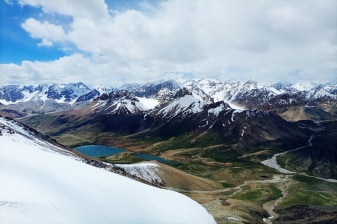
Watched over by the mighty Karakoram ranges, Gilgit pulses with an Old Silk Road energy. Get a local guide to reveal its bazaars and minarets, or the hiking trails that pierce into the Himalaya.
What's Included
- Meals: breakfast, lunch, and dinner
- Transportation with fuel and toll taxes
- Licensed and professional Pakistani tour guide
- All area entry tickets
- Accommodation on a twin-sharing basis
- Jeeps for Kalash Valley
- Airport pick-up and drop-off
Not Included
- Domestic and international airfare
- Tips anywhere at any time
- Local wine in Kalash Valley
- Any extras in the hotel
- Laundry
Itinerary
-
1Day 01
Arrival in Islamabad
Meet at Islamabad airport and drive to the hotel. Meet at Islamabad airport and drive to the hotel. If time allows, visit Islamabad. If time allows, visit Islamabad. Dinner and night stay.
-
2Day 02
Drive from Islamabad to Chitral
Have an early breakfast and drive toward Chitral via Dir, Chakdara, and Malakand. Have an early breakfast and drive toward Chitral via Dir, Chakdara, and Malakand. Have lunch en route. Have lunch en route. After lunch, drive to Ayun Chitral via the Lowari Tunnel with your Pakistani tour guide. After lunch, drive to Ayun Chitral via the Lowari Tunnel with your Pakistani tour guide. Arrive at Ayun Fort for dinner and night stay. Arrive at Ayun Fort for dinner and night stay.
-
3Day 03
Journey to Bumberat Kalash
After breakfast, take a jeep drive to Bumberat Kalash. After breakfast, take a jeep drive to Bumberat Kalash. Arrive in Kalash Valley for lunch and visit the locals. Arrive in Kalash Valley for lunch and visit the locals. Dinner and night stay.
-
4Day 04
Kalash Festival Celebrations
Have breakfast and join the locals for the festival celebrations. Have breakfast and join the locals for the festival celebrations. Savour lunch and visit the valleys of Kalash. Savour lunch and visit the valleys of Kalash. Dinner and night stay.
-
5Day 05
Drive from Kalash to Mastuj
Wake up for breakfast and drive to Mastuj Valley via Boni. Wake up for breakfast and drive to Mastuj Valley via Boni. Stop for lunch en route. Stop for lunch en route. Arrive at Mastuj Valley. Arrive at Mastuj Valley. Dinner and night stay.
-
6Day 06
Mastuj to Phandar via Shandur
Have breakfast and drive to Phandar via the world's highest polo grounds, Shandur Polo Ground. Have breakfast and drive to Phandar via the world's highest polo grounds, Shandur Polo Ground. Stop for lunch en route. Stop for lunch en route. Arrive at Phandar Valley. Arrive at Phandar Valley. Dinner and night stay.
-
7Day 07
Explore Phandar Valley
Have breakfast and visit the lush green valley of Phandar, Gupis Phandar Lake, and Khatli Lake. Have breakfast and visit the lush green valley of Phandar, Gupis Phandar Lake, and Khatli Lake. Dinner and night stay.
-
8Day 08
Drive from Phandar to Hunza
After breakfast, drive to Hunza via the Karakoram range. After breakfast, drive to Hunza via the Karakoram range. Arrive in Gilgit for lunch. Arrive in Gilgit for lunch. After lunch, drive to Hunza via the Karakoram Highway. After lunch, drive to Hunza via the Karakoram Highway. Stop at the Old Silk Route point and the Rakaposhi Peak 7788 m viewpoint. Stop at the Old Silk Route point and the Rakaposhi Peak 7788 m viewpoint. Have tea and continue to Hunza Valley. Have tea and continue to Hunza Valley. Arrive in Hunza Valley for dinner and night stay. Arrive in Hunza Valley for dinner and night stay.
-
9Day 09
Hunza Valley Forts and Viewpoints
Have breakfast and take a soft hike to the 700-year-old Baltit Fort for a guided tour. Have breakfast and take a soft hike to the 700-year-old Baltit Fort for a guided tour. After Baltit, drive to the 1000-year-old Altit Fort. After Baltit, drive to the 1000-year-old Altit Fort. Have lunch and go to Duikar for a bird's-eye view of Hunza Valley. Have lunch and go to Duikar for a bird's-eye view of Hunza Valley. Enjoy views of Rakaposhi, Diran Peak, Golden Peak, Rush Pari Peak, Ultar Peak, and Ladyfinger Peak. Enjoy views of Rakaposhi, Diran Peak, Golden Peak, Rush Pari Peak, Ultar Peak, and Ladyfinger Peak. Drive back to the hotel for dinner and night stay. Drive back to the hotel for dinner and night stay.
-
10Day 10
Hunza to Gojal and Passu
Enjoy breakfast and drive to Gojal Valley. Enjoy breakfast and drive to Gojal Valley. Go boating at Attabad Lake in the heart of the Karakoram. Go boating at Attabad Lake in the heart of the Karakoram. Arrive at Gulmit for lunch. Arrive at Gulmit for lunch. After lunch, visit Hussaini Suspension Bridge, Borith Lake, and Passu Cones. After lunch, visit Hussaini Suspension Bridge, Borith Lake, and Passu Cones. Dinner at a local house and night stay in Passu village.
-
11Day 11
Excursion to the Pak-China Border
Have breakfast and drive to the Pak-China border via the KKH and Sost Valley. Have breakfast and drive to the Pak-China border via the KKH and Sost Valley. Enjoy the highest border of Pakistan and China. Enjoy the highest border of Pakistan and China. Drive back to Sost for lunch and continue back to Hunza Valley. Drive back to Sost for lunch and continue back to Hunza Valley. Dinner and night stay.
-
12Day 12
Hunza to Naltar and Gilgit
Have breakfast and drive to Naltar Valley. Have breakfast and drive to Naltar Valley. Visit Satrang Lake. Visit Satrang Lake. Savour lunch and drive to Gilgit. Savour lunch and drive to Gilgit. Arrive in Gilgit for dinner and night stay. Arrive in Gilgit for dinner and night stay.
-
13Day 13
Drive from Gilgit to Besham
Have breakfast and drive to Besham via the KKH. Have breakfast and drive to Besham via the KKH. Stop for lunch en route. Stop for lunch en route. Arrive in Besham for dinner and night stay. Arrive in Besham for dinner and night stay.
-
14Day 14
Besham to Islamabad via Swat
After breakfast, drive to Islamabad via Swat Valley and Shangla Pass. After breakfast, drive to Islamabad via Swat Valley and Shangla Pass. Stop for lunch en route. Stop for lunch en route. Arrive in Swat for lunch, and after lunch, drive to Islamabad. Arrive in Swat for lunch, and after lunch, drive to Islamabad. Arrive in Islamabad for dinner and night stay. Arrive in Islamabad for dinner and night stay.
-
15Day 15
Departure from Islamabad
Have breakfast and get dropped off at the airport. Have breakfast and get dropped off at the airport. Fly home. Fly home.
Meeting Point
Meeting point: Islamabad Airport Rd, Islamabad Gandhara International Airport, Islamabad, Attock, Punjab, Pakistan · Tour start: Islamabad Airport Rd, Islamabad Gandhara International Airport, Islamabad, Attock, Punjab, Pakistan — Tour ends at the same location as the start point.