5-Day Siwa Oasis Tour from Cairo with Desert Camping




About This Tour
Sign up for a heritage tour and learn about the history of Egypt by visiting the highlights of Siwa Oasis. See the famous Oracle Temple, Cleopatra's Spring, the...
Duration: 5 Days · Tour type: Private · Activity level: Easy · Accommodation: Included · Budget · Transport: Included · Wheelchair access: Yes · Cities: Cairo, Matruh, Siwa Oasis, El Alamein · Languages: English
Know before you go: Please refer to your itinerary for redemption instructions.; Please be ready 15 minutes prior to your scheduled pickup time.; Please inform us of your hotel name, address, or arrival flight number, airline, and time 48 hours before the start of your activity.
About Matruh

Matruh
Explore the list of top ranked local tour guides in Matruh. Get tour activities offered by tour companies and independent travel guides in Matruh.
What's Included
- All transfers in the latest model private vehicle
- Expert guide starting from Cairo
- 3 nights' accommodation with half board at Ghaliet Ecolodge Hotel
- 1-night camping at Al Nyhaya campsite (BBQ dinner and breakfast)
- Water and snacks
- Entrance fees
- Taxes and services
Not Included
- Personal expenses and extras at the hotels or during the tours
- Alcoholic drinks
- Any other item not mentioned above
- Tips
Itinerary
-
1Day 01
Cairo to El Alamein Museum and Siwa
Meet your guide in Cairo and drive to El Alamein (driving distance: 259 km). The journey takes about 3 hours, and on the way, stop for a coffee break. We advise you to take a lunch box. Visit the El Alamein Museum, which provides good information about the battle of El Alamein. About 1 mile west of the British memorial, on the north side of the road, are the tombs of the Italians and Germans, as well as the Commonwealth War Graves, for anyone interested in war memorabilia. Drive to Siwa through Marsa Matrouh. Overnight in a Siwa hotel.(Meals: lunch, dinner)
-
2Day 02
Oracle Temple, Cleopatra's Spring and Shali Fortress
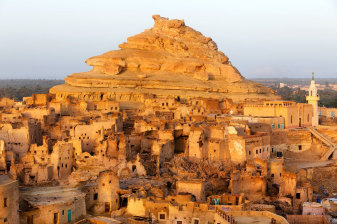
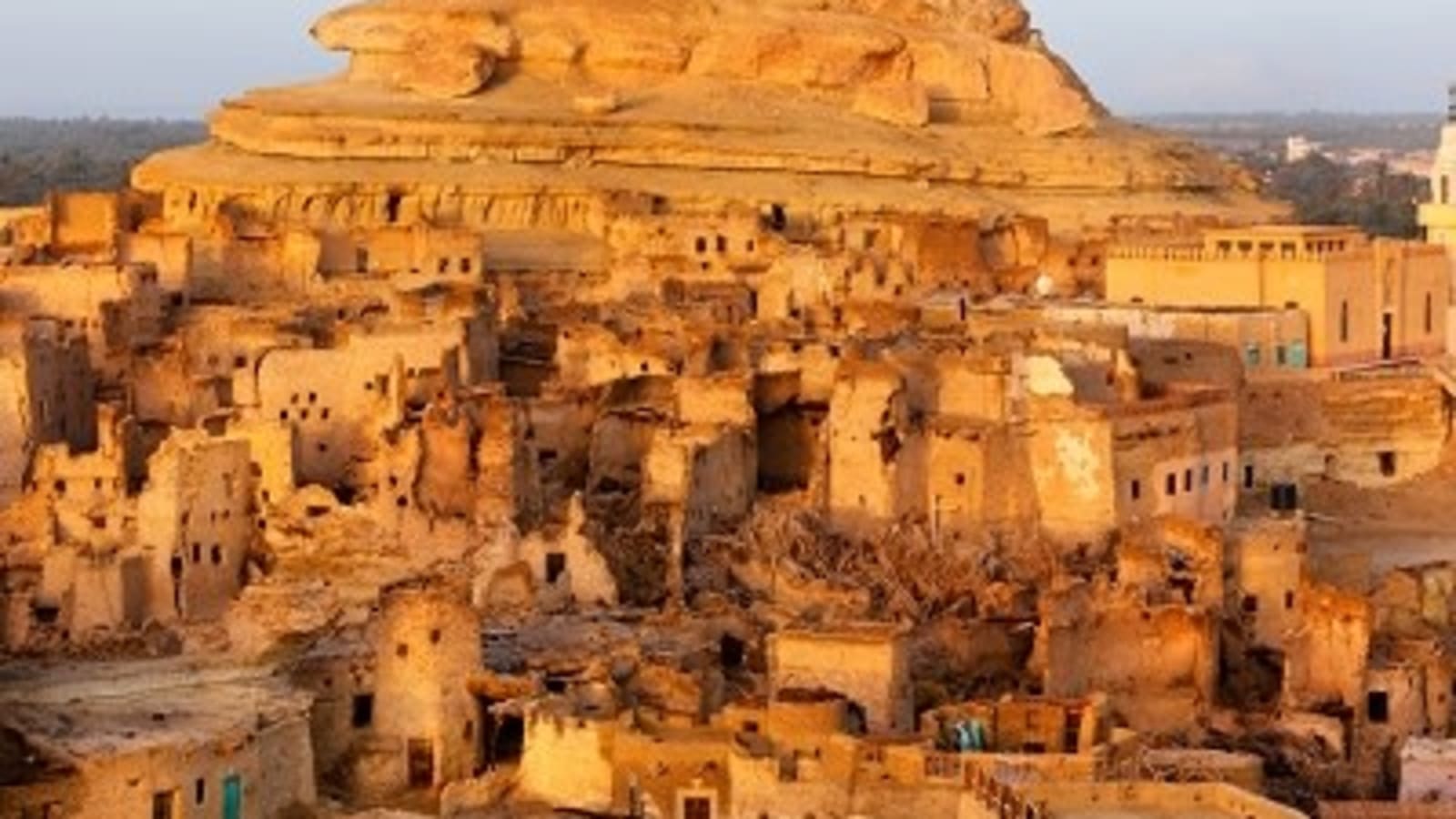
Head out to visit the following places:The Oracle Temple: It is a spectacular temple, the Temple of Amun, built during the Twenty-sixth Dynasty. The temple and its oracle flourished in Greek and Roman times. It was built on top of a mountain, and the ruins can be reached by climbing a well-marked path up the side of the rock. According to one legend, the temple was built in honour of Ham, the son of Noah, by Danaus Egyptian. Another legend relates the foundation of the temple to the Greek god Dionysus, who was lost in the western desert and perishing of thirst when a ram appeared and guided him to the spring of Agroumi. In gratitude, Dionysus erected this temple. Oracles, manifestations of God, were highly revered in the ancient world because they were believed to see into the future. They were consulted regularly before important decisions were made. It is believed that Alexander the Great wished to consult the Siwan oracle to seek confirmation that he was the son of Zeus, the Greek god of gods. When he and his entourage arrived, a manifestation of the oracle was paraded through the city accompanied by eighty priests. After he visited the oracle, Alexander was shown with the horns of the ram, the symbol of Amun, the god of gods in Egypt, whenever his image appeared on coins.Cleopatra's Spring: The springs of Siwa are famous throughout the western desert. The Spring of the Sun, or Cleopatra's Bath, has been mentioned by travellers to Siwa since the days of Herodotus. Legend maintains that Cleopatra swam here when she visited Siwa Oasis. Also, see Cleopatra's Bath.The fortress at Shali: Built on a hill inside a protective wall originally breached by a single gate, the maze of mud-brick buildings that comprises the fortress served the people of the oasis for nearly 8 centuries. The inhabitants had to live in narrow quarters, sharing their animals, which were herded into the fortress each evening. The huge chunks of salt so prevalent in Siwa Oasis were used in the construction of the fortress, as they helped to strengthen the wall. Rain has unfortunately proved to be more destructive to the fortress than any human invaders.Abdo Restaurant: When it comes to food, Abdo's Restaurant is recommended not only for its dining menu but for its breakfast menu as well. Located at Siwa Market Square, the restaurant is easy to find. Besides its highly praised food, friendly service, and cosy atmosphere, Abdo's is also a place to catch an interesting conversation with some of the locals.Salt Lake of Fatnas: Fatnas is a small island in Birket Siwa. You can reach it on foot or by bike. It is a wonderful place to sit and enjoy the sunset. You will get a spectacular view of the lake, with Gebel Bayda and Hamra forming the backdrop to the west. The Oracle Temple: It is a spectacular temple, the Temple of Amun, built during the Twenty-sixth Dynasty. The temple and its oracle flourished in Greek and Roman times. It was built on top of a mountain, and the ruins can be reached by climbing a well-marked path up the side of the rock. According to one legend, the temple was built in honour of Ham, the son of Noah, by Danaus Egyptian. Another legend relates the foundation of the temple to the Greek god Dionysus, who was lost in the western desert and perishing of thirst when a ram appeared and guided him to the spring of Agroumi. In gratitude, Dionysus erected this temple. Oracles, manifestations of God, were highly revered in the ancient world because they were believed to see into the future. They were consulted regularly before important decisions were made. It is believed that Alexander the Great wished to consult the Siwan oracle to seek confirmation that he was the son of Zeus, the Greek god of gods. When he and his entourage arrived, a manifestation of the oracle was paraded through the city accompanied by eighty priests. After he visited the oracle, Alexander was shown with the horns of the ram, the symbol of Amun, the god of gods in Egypt, whenever his image appeared on coins. Cleopatra's Spring: The springs of Siwa are famous throughout the western desert. The Spring of the Sun, or Cleopatra's Bath, has been mentioned by travellers to Siwa since the days of Herodotus. Legend maintains that Cleopatra swam here when she visited Siwa Oasis. Also, see Cleopatra's Bath. The fortress at Shali: Built on a hill inside a protective wall originally breached by a single gate, the maze of mud-brick buildings that comprises the fortress served the people of the oasis for nearly 8 centuries. The inhabitants had to live in narrow quarters, sharing their animals, which were herded into the fortress each evening. The huge chunks of salt so prevalent in Siwa Oasis were used in the construction of the fortress, as they helped to strengthen the wall. Rain has unfortunately proved to be more destructive to the fortress than any human invaders. Abdo Restaurant: When it comes to food, Abdo's Restaurant is recommended not only for its dining menu but for its breakfast menu as well. Located at Siwa Market Square, the restaurant is easy to find. Besides its highly praised food, friendly service, and cosy atmosphere, Abdo's is also a place to catch an interesting conversation with some of the locals. Salt Lake of Fatnas: Fatnas is a small island in Birket Siwa. You can reach it on foot or by bike. It is a wonderful place to sit and enjoy the sunset. You will get a spectacular view of the lake, with Gebel Bayda and Hamra forming the backdrop to the west. Return to the hotel for dinner. Overnight at the hotel in Siwa Ghaliet.(Meals: Breakfast, lunch, dinner)
-
3Day 03
Great Sand Sea Adventure and Desert Camping
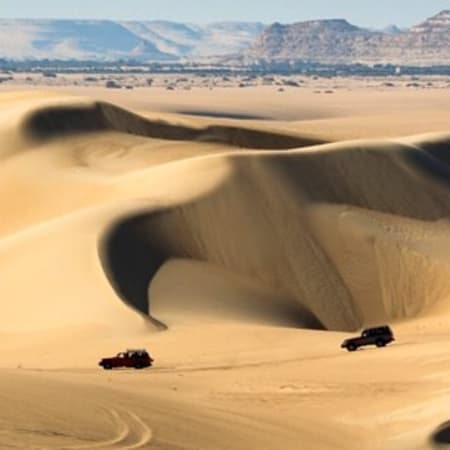
Have a free morning, and in the afternoon, go to the Great Sand Sea by Jeep 4x4. Visit the hot and cold springs at Bir Waheed. Engage in sandboarding. The best sand dunes for sandboarding in Egypt are here in the Great Sand Sea. Later, enjoy some traditional Bedouin tea at sunset, followed by dinner. Enjoy camping at one of the most beautiful camping sites. Al Nyhaya has five high-quality lotus bell tents placed within the protective outer walls of the camp. They are equipped with comfortable mattresses, mosquito nets, and a double layer to keep the heat out in summer and the cold out in winter. The bell tents are set on a rocket bell floor-heating platform, which can be heated by a wood fire to warm the tent floor on cold winter nights. Each tent can accommodate up to a maximum of 3 persons comfortably, although 1 or 2 persons in a tent are also possible. Besides the bell tents, there are also plenty of Bedouin tents to spend the night in the traditional local style. There is no better opportunity to watch the stars than under a crystal-clear summer sky and a cool night with minimal light and noise, which the Siwa desert offers. Overnight in camping.(Meals: Breakfast-lunch-dinner)
-
4Day 04
Salt Lakes, Dakrur Mountain and the Mountain of the Dead
Have breakfast, and drive to the salty lake. The salty water lifts you above the surface and makes you float. You do not need to be a good swimmer. Take care when you go swimming, and do not let the water reach your eyes, as it can be really painful. Choose the crystal lake, and there are many of them. Keep looking for the purest one when you can see the bottom. Take a bottle of mineral water to shower with after swimming in the lake. The salt lakes have hyper-salinity properties similar to those of Jordan's Dead Sea. This also means that the lakes hold great healing properties, much stronger than regular seawater. In all cases, it will make for a wonderful swim. Proceed to Abu Shrouf sweet water spring at 11:00 a.m. This is highly recommended after swimming in a salty lake. Go to Gebel Al Dakrur, just a few miles south of Shali, which is visible from all points in the oasis, and its triple peaks serve as a good landmark when travelling east or west. The view from the summit of this mountain is outstanding. There are three doctors at Dakrur famous for their sand-cure treatment of rheumatism and arthritis. A sand bath is taken during the hottest months of the year, from July to September. Patients from as far away as Sweden and Germany make the journey to Siwa Oasis for these cures. They stay at one of the clinics at the base of the mountain. Early in the morning, workers dig shallow graves in the sand along the slopes to allow the sun to heat the area. At midday, when the sun is at its most intense, the patient lies in the hollow and is covered with additional hot sand. Less sand is piled in the area around the heart. Then the patient is removed to a nearby tent, wrapped in hot blankets, and asked to drink herbal teas and chicken soup. The treatment continues for five to seven days, during which time the patient is forbidden to bathe or drink anything cold. Visit Gebel Al Mawata. The Mountain of the Dead is a conical mountain a little over a kilometre to the north of Shali. Tombs from the Twenty-sixth Dynasty, Ptolemaic, and Roman periods are cut into the side of the mountain. There are four tombs worth seeing at Gebel Al-Mawta. See the Tomb of Niperpathot. The tomb of Niperpathot is a large tomb and one of the oldest tombs in the oasis, almost certainly from the Twenty-sixth Dynasty. It has a court with 3 tombs on the mountain. Niperpathot was the Prophet of Osiris and scribe of the divine documents. Head to the Tomb of the Crocodile. It was excavated in 1941 and consists of three rooms with decorations of Osiris, Hathor, and Crocodile Sobek. Enjoy a free evening after dinner for shopping in Siwa Oasis. Overnight at the hotel.(Meals: Breakfast-lunch-dinner)
-
5Day 05
Return to Cairo via Marsa Matrouh
Have breakfast and drive to Cairo, passing by Marsa Matrouh, the North Coast of Egypt. Meal: Breakfast
Meeting Point
Meeting point: Cairo, Egypt · Tour start: Cairo, Cairo Governorate, Egypt — Tour ends at the same location as the start point.